
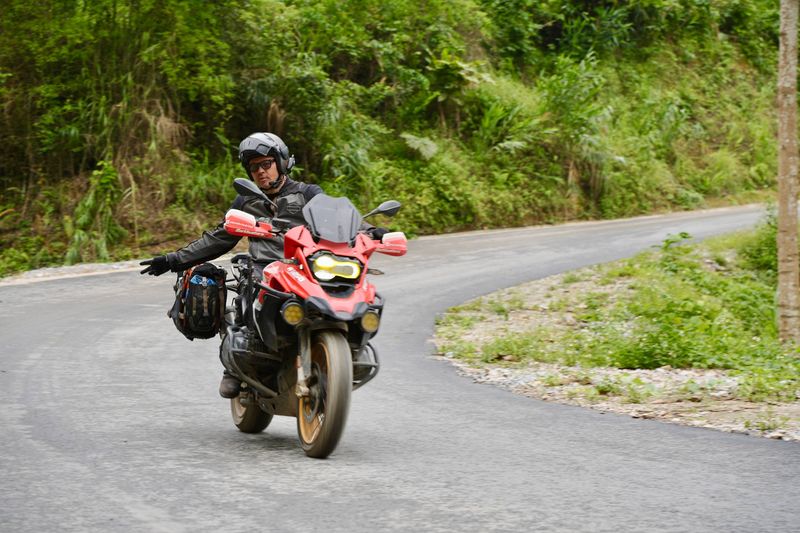
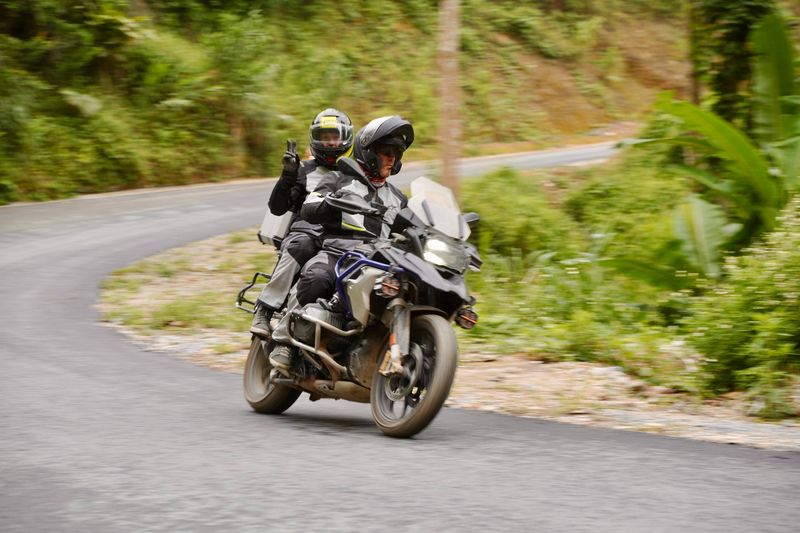
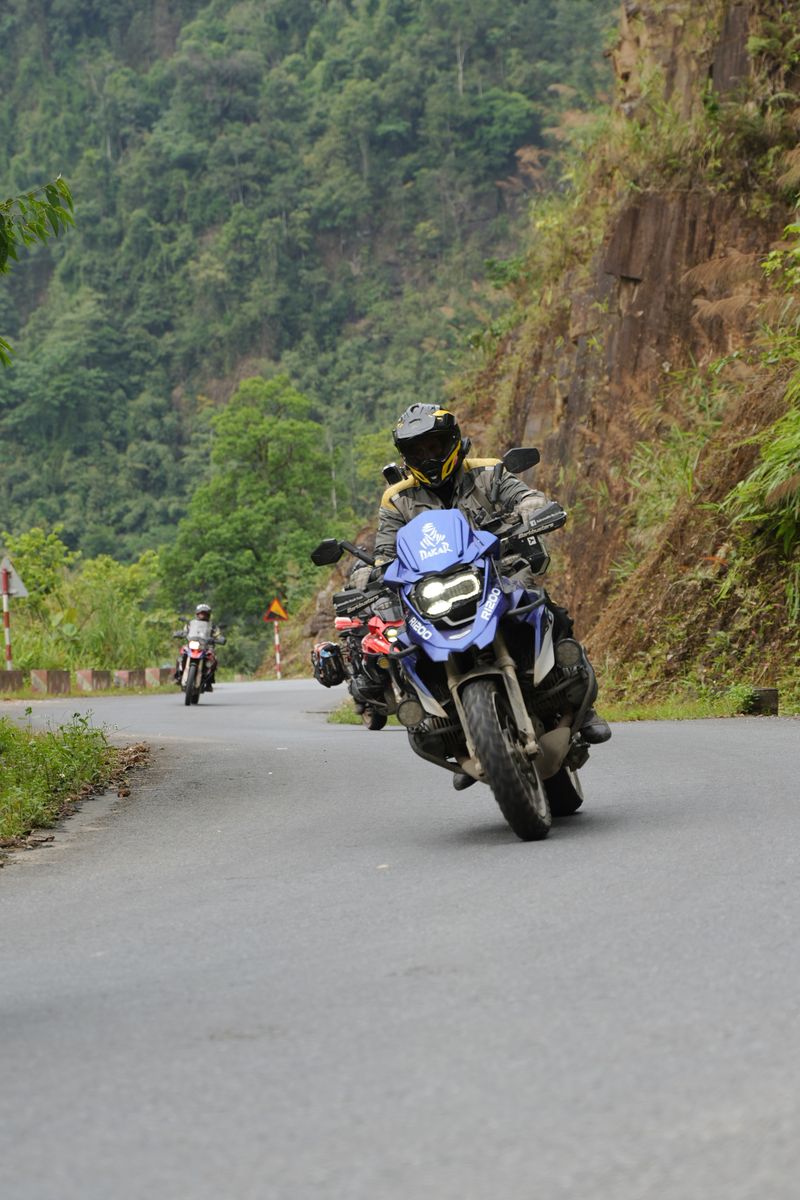
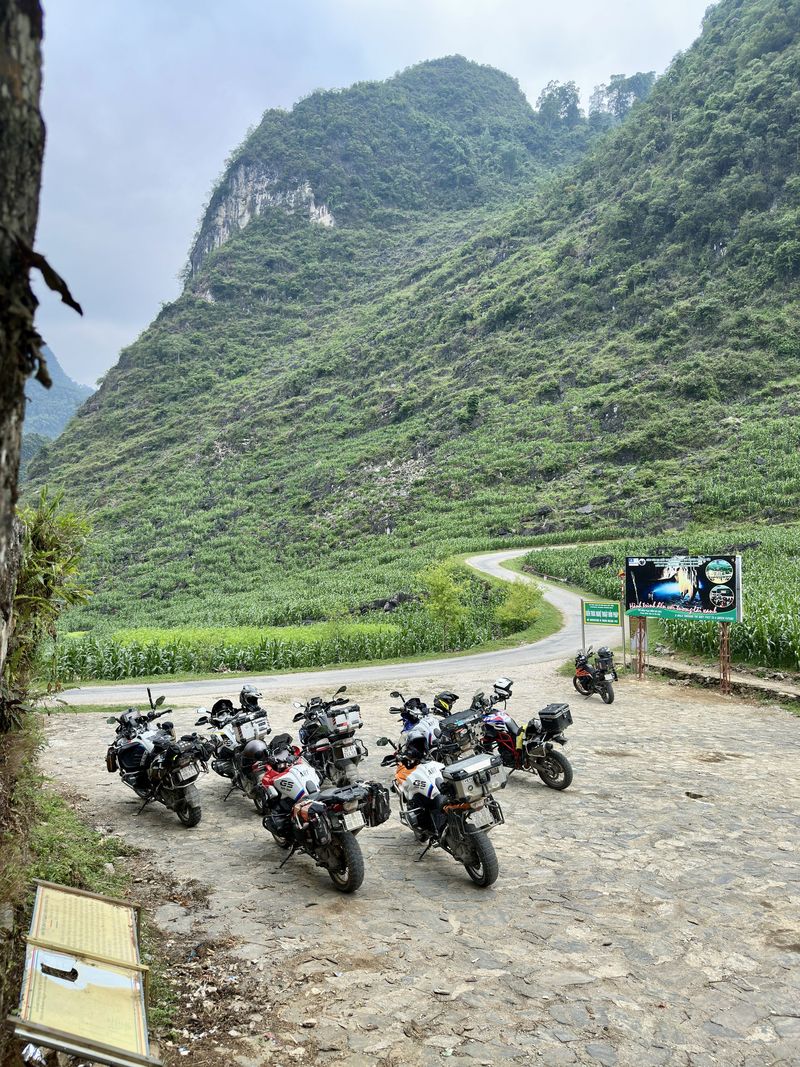
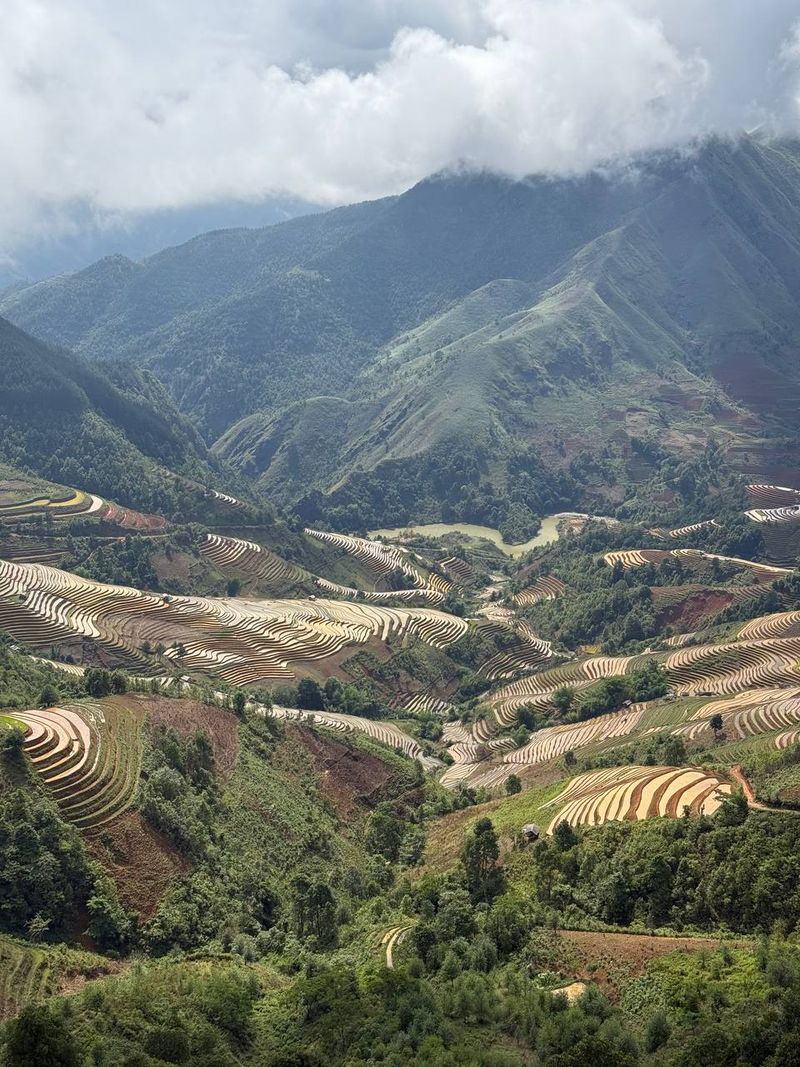
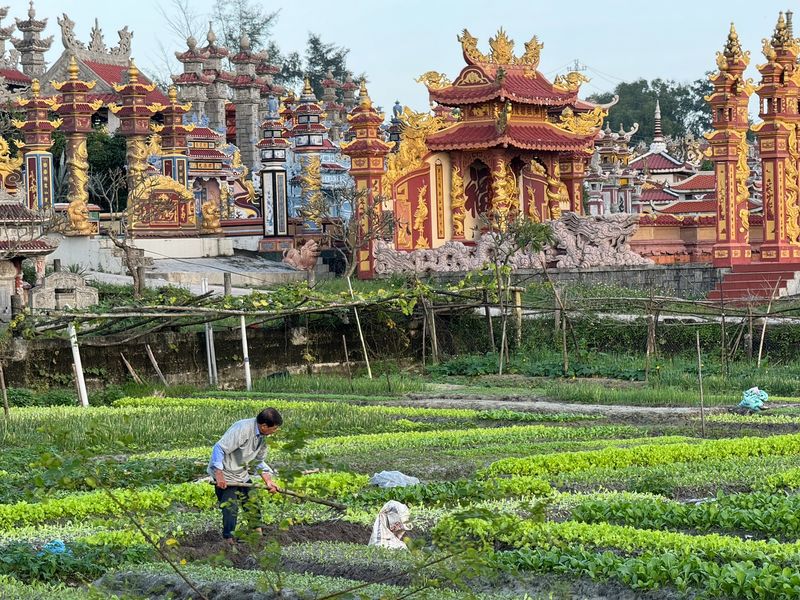
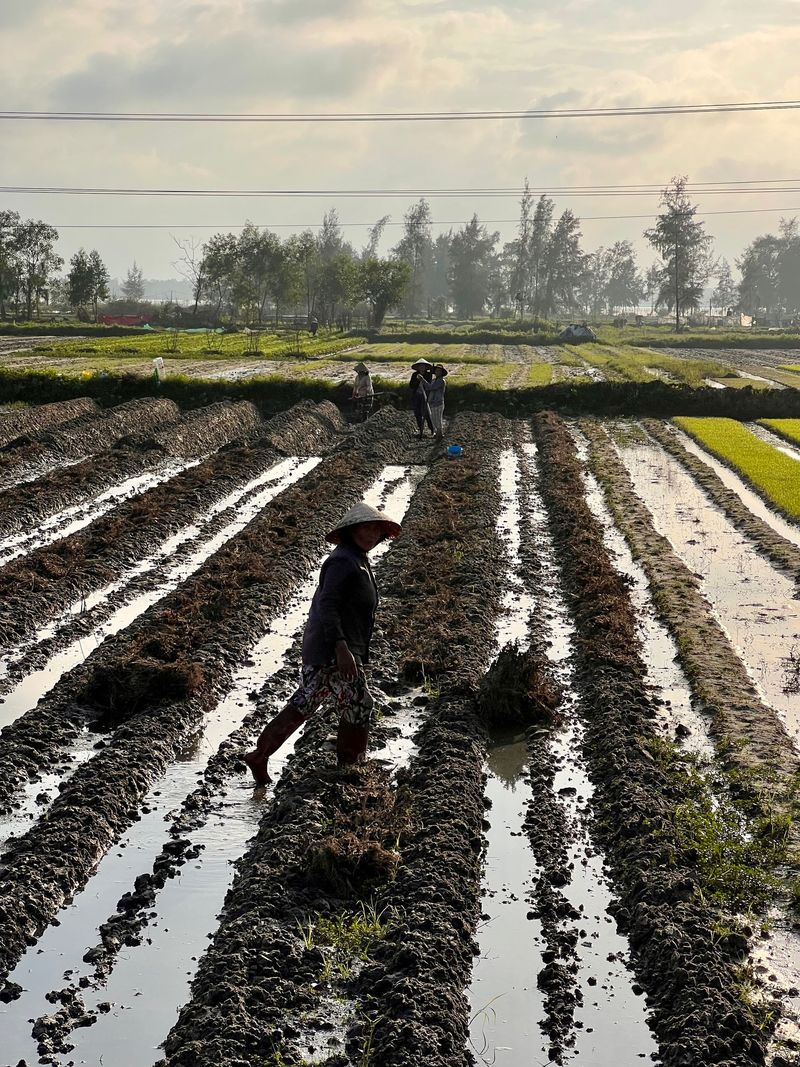
In the mountains of northern Vietnam, the shape of the land tells you how people live. Around Mu Cang Chai, generations of farmers have carved rice terraces into slopes that look too steep to work. The road climbs above the fields, then drops back into valleys where houses stand on stilts and the day starts early. It’s a side of Vietnam you get to know slowly, one stretch of road at a time.
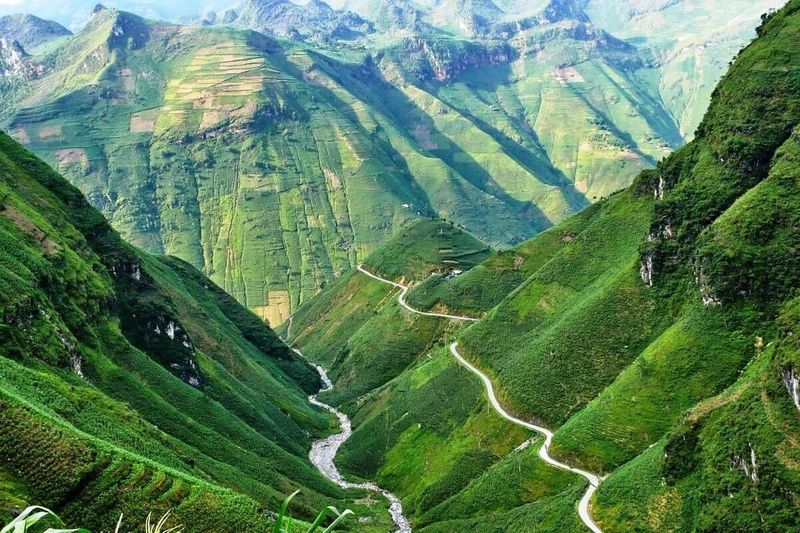
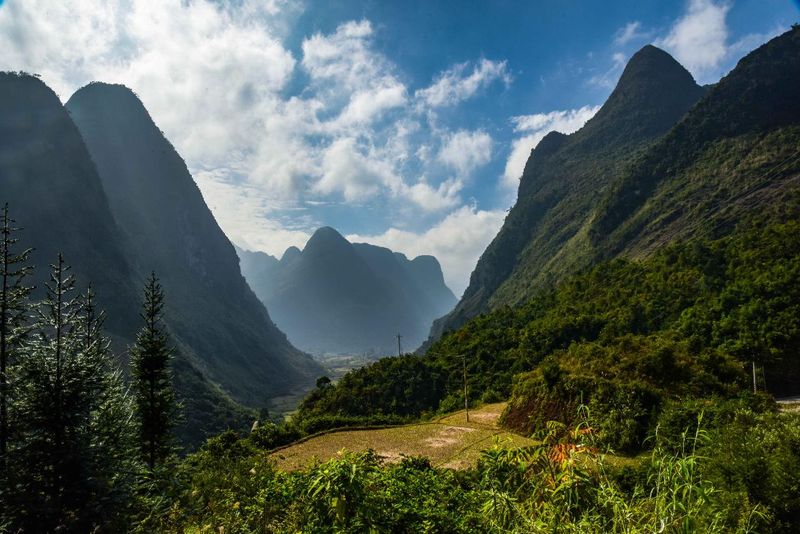
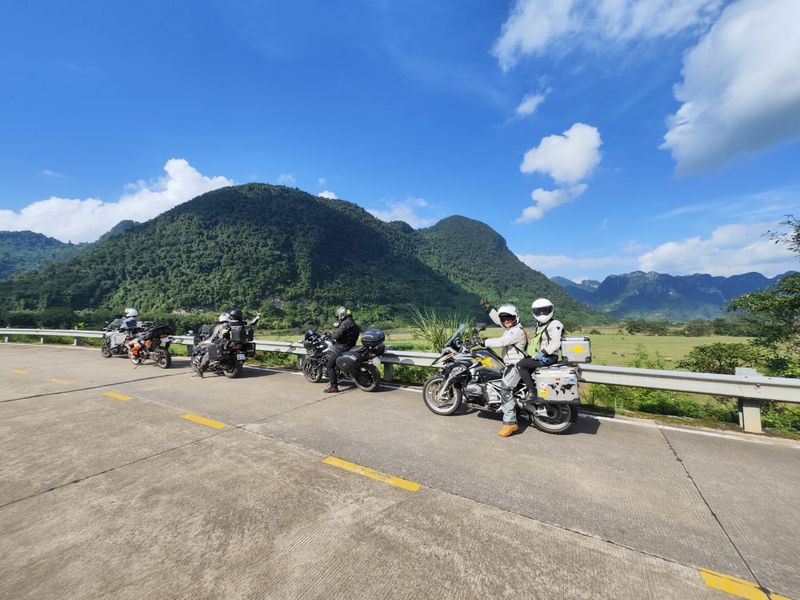
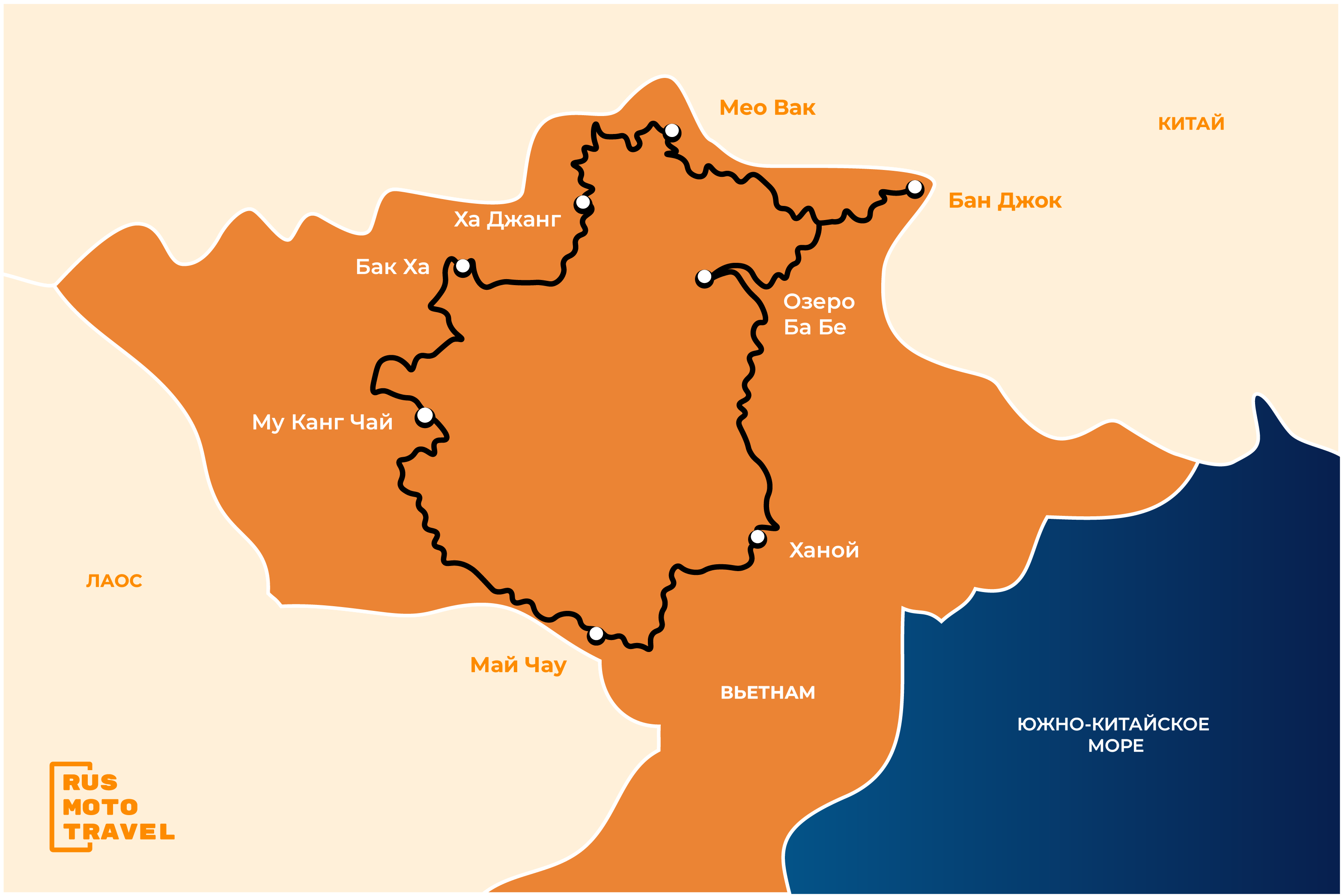
Near Ha Giang, the landscape changes. Limestone peaks rise close to the road, and on the Ma Pi Leng Pass the ground falls away into the Nho Que Canyon. Farther east, the country opens up around Ban Gioc, where the river spills over broad rock shelves at the border with China. By the time we return to Hanoi, we’ll have spent eleven days getting to know the north, from its farmed hillsides to its border country.
What’s Included:
What’s Not Included:
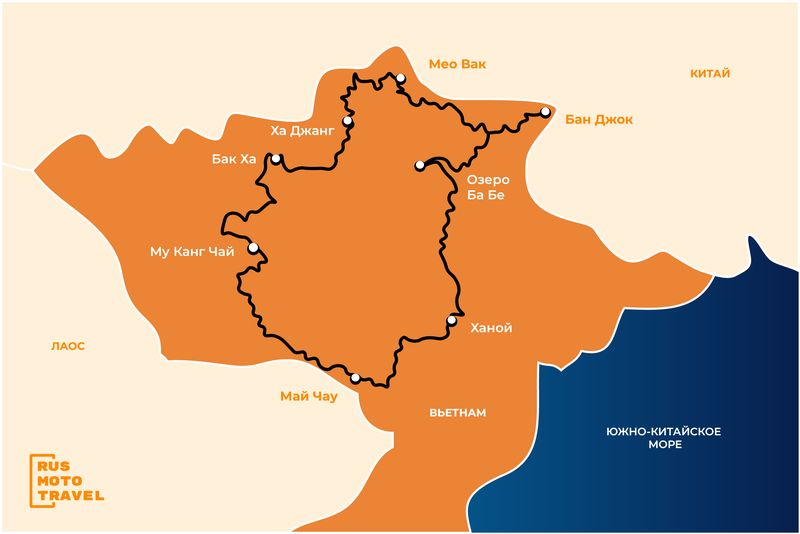
Hanoi – Mai Chau – Mu Cang Chai – Sapa – Hoang Su Phi – Ha Giang – Meo Vac – Ban Gioc – Hanoi
Arrival in Hanoi, transfer to the hotel. Tour briefing, document signing, and motorcycle pickup. After that, a short walk around the city followed by a group dinner at a restaurant.
Depart Hanoi on Highway QL6 with its wide, flowing sweepers as the city bustle gives way to views of the Da River and the cool air of the northwest. Climb the Thung Khe Pass with its limestone cliffs and “sea of clouds,” then descend into the rice valleys of Mai Chau. The final stretch leads through tea hills and broad plateaus of Mai Chau under wide, clear skies.
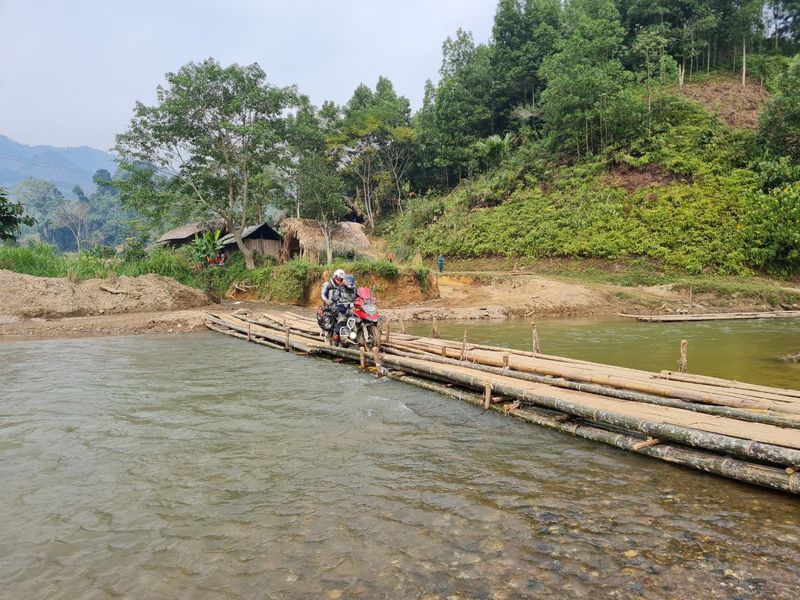
Descend from the Moc Chau plateau into the patchwork valleys of Nghia Lo, then aim for Khau Pha Pass – a scenic “balcony” overlooking the terraced bowls of Tu Le. Backroads thread through stilt-house villages, bamboo bridges, and hot springs. The approach to Mu Cang Chai tightens into beautiful twisties framed by cascading rice terraces and distant granite ridgelines.
The route winds through the amphitheaters of rice terraces in La Pan Tan and Che Cu Nha, descends to Than Uyen, and then climbs the O Quy Ho Pass into crisp mountain air. The Fansipan massif fills the skyline. Roadside waterfalls mist the visor, while high-altitude sweepers and hairpins lead into the mountain atmosphere of Sapa.
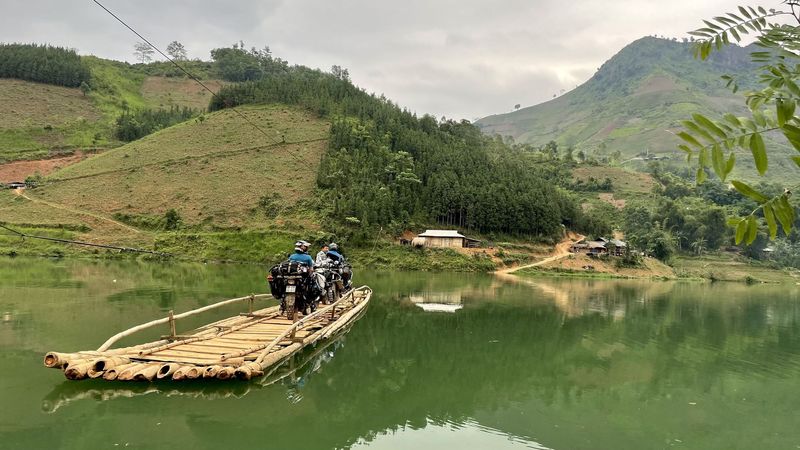
Leave Sapa on backroads along the Chay River, where bamboo forests give way to steep switchbacks and remote valleys. Beyond Xin Man, cliff-hugging roads reveal tiered terraces stretching to the horizon. Golden light, mountain markets, and river crossings lead to the legendary green “steps” of Hoang Su Phi.
Ride along ridgelines toward Tay Con Linh, passing palm-lined valleys and patchwork fields. Stilt-house villages, light suspension bridges, and gentle canyon curves accompany us along the Lo River to the south. Limestone outcrops signal the start of the karst plateau, and the road eases into the riverside streets of Ha Giang City.
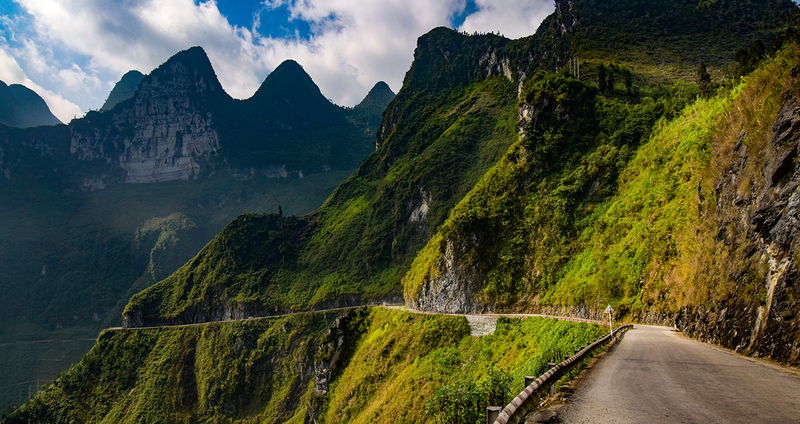
Enter the Dong Van Karst Plateau via QL4C, climbing to the Quan Ba “Heaven Gate” and flowing through the pine forests of Yen Minh. Limestone spires crowd the road toward Dong Van. Then the Ma Pi Leng Pass soars above the Tu San Gorge, with cliff-edge “skywalk” sections descending into the Meo Vac valley.
Climb out of Meo Vac as the Nho Que Canyon fades behind. Quiet Bao Lac valleys unfold into Cao Bang’s sugarloaf karsts and emerald streams. Ma Phuc Pass carves S-curves between limestone walls. River villages, mosaic terraces, and cool forest shade lead us toward the thunder of Ban Gioc Waterfall.
Depart Ban Gioc through misty karst fields to Cao Bang, then settle into the rolling rhythm of Highway QL3. Bac Kan’s forests give way to Thai Nguyen’s tea hills and broader roads. The Red River Delta opens ahead, guiding us through villages and rice paddies back into Hanoi’s vibrant pace.
The information is given for general guidance on company services and does not constitute a public offer to contract. Current information on terms and conditions you can check with the representative of the Russian Moto Travel Company, please contact us by phone: 8 (495) 664-58-46, by e-mail: info@rusmototravel.com, or directly at our office: Business Center “Borodinskaya Panorama”, Pervaya Borodinskaya Street 2A, Moscow