
Quiet back roads lead us through small villages, where we get a glimpse of everyday life in the Northern Urals. Along the way, we’ll see the rock pillars above the Usva River, explore the passageways of Stone City and visit the historic town of Cherdyn
Inspired by Alexei Ivanov’s novel The Heart of Parma, this tour takes us through the river valleys and old towns of the Northern Urals. We start in Perm and ride a 1,100 km loop on mostly paved roads, with short gravel stretches on the way to some stops.
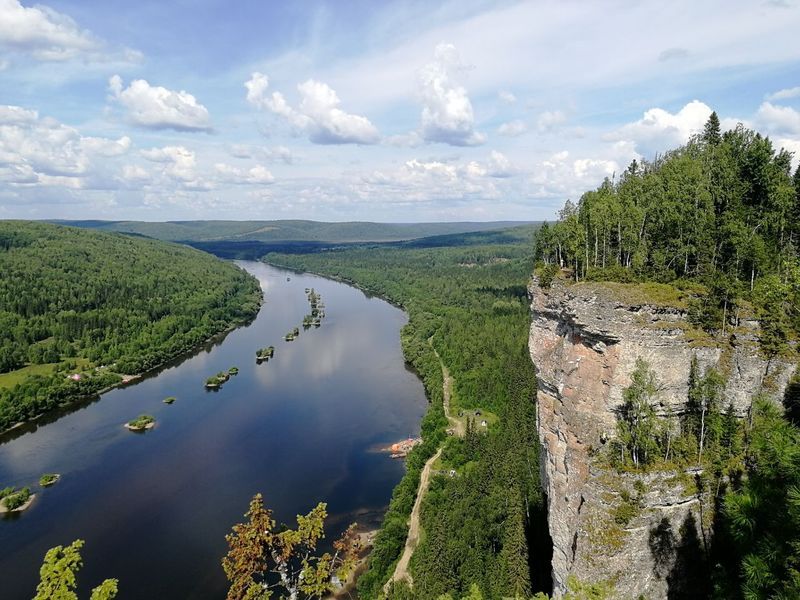
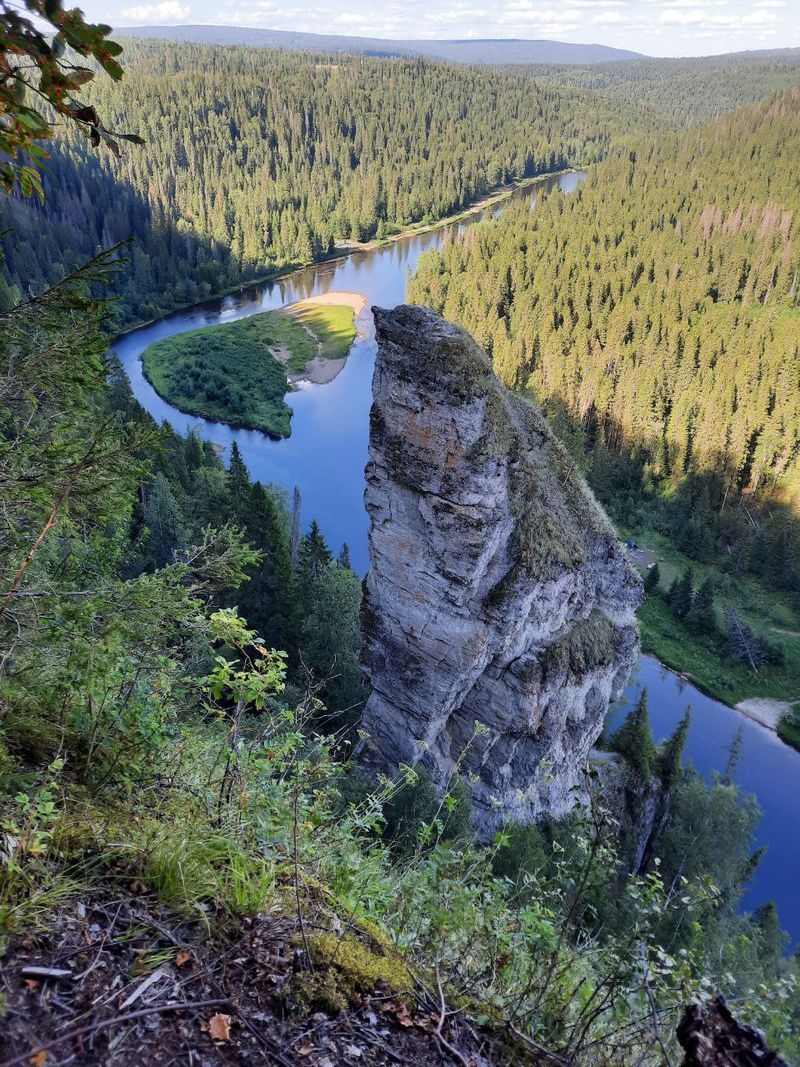
In the Usva valley, we get off the bikes to see the rock pillars rising above the river and explore the rock formations of Stone City. In Usolye, we visit the Salt Museum and the Stroganov estate to see how the salt trade shaped this part of the Urals.
Farther north, the Vishera River brings us to the landscapes around Vetlan and Mount Polyud. From there, we continue to Cherdyn and make a side trip to Nyrob, where the local museum tells part of the Romanov family’s story.
Northern Urals Tour Dates and Prices
- Dates 2027:
- 12–19 June
- 20–27 June
- 27 June–04 July
- Duration: 8 days
- Total mileage: 1,100 km
- Start and finish: Perm
- Roads: 99% asphalt
- Tour level: Medium. The route is on asphalt, but there will be short gravel roads to some places
- Price with BMW F750GS / F850GS or Voge 900: 2 500 EUR
- Price with BMW R1250GS: 2 800 EUR
- Price with your own motorcycle: 1 500 EUR
- Price for the passenger: 1 000 EUR
- Single room supplement: 500 EUR
- Deposit for the motorcycle: 2 000 EUR
What’s Included:
- Motorcycle rental (for rental packages)
- Accommodation in 3-4* hotels (twin rooms)
- Breakfasts
- Leading guide on a motorcycle
- Support vehicle
- Excursions
- Technical support
What’s Not Included:
- Lunches and dinners
- Fuel
- Travel to and from Perm
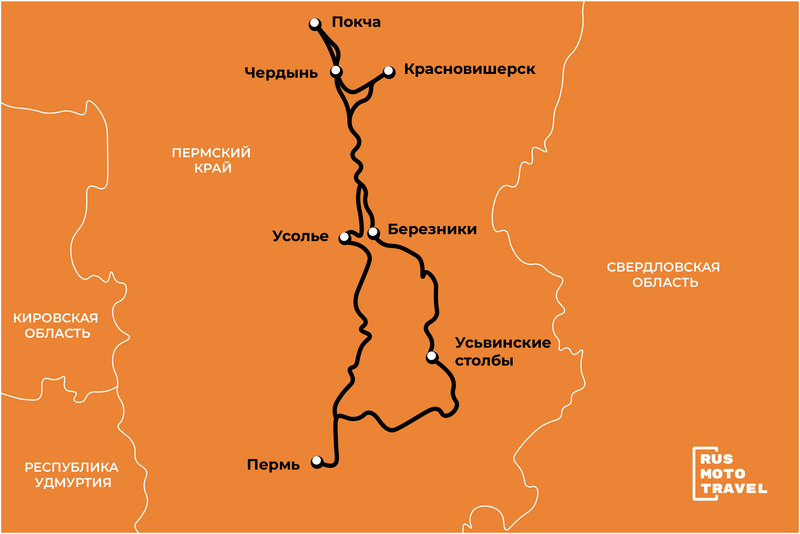
Northern Urals Route and Map
Perm – lodge near the Usva Pillars – Berezniki – Krasnovishersk – Cherdyn – Perm

Tour Program
Day 1. Arrival in Perm
The group meets in Perm. We have a briefing, discuss the upcoming route, get our motorcycles, and sign the documents.
Day 2. Perm – Usvinskie Pillars, 200 km
At 9:45, after a morning briefing, we start riding. We go to the Takman ski resort, one of the two main ski resorts in the Urals, where we will have lunch. After lunch, we ride to a lodge near the Usvinskie Pillars, the main sight in this area. We check in, order a sauna and dinner for the evening, and go for a light hike to the pillars. The walk uphill takes about one hour. Those who really don't like walking can take a boat ride on the river instead and see the pillars from the water.
Day 3. Usvinskie Pillars – Usolye – Berezniki, 200 km
Before breakfast, you can take a walk to Kamenny Gorod (Stone City). It takes about 25 minutes to get there and 25 minutes to come back. The path is flat, with almost no uphill, and has a wooden walkway. Then we set off towards Gubakha, the second ski resort in the Urals, and we will have a coffee break there. On the way, we will see several large mining plants. Let's not forget that the Urals are famous for their industry.
Next, we go to Usolye. This place was once the main base of the Stroganovs, who were merchants and industrialists in the Urals. There were warehouses, storage bases, piers, ferries, and barges. Before the civil war of 1917, the Russian Empire had one of the largest and most efficiently managed river fleets in the world. But the revolution and the events that followed changed everything. We will talk about this and also visit the Stroganov museum complex in Usolye.
After that, we return to Berezniki. If possible, we will look at the "sinkholes" – the site of a man-made accident that happened in 2011 at the Uralkali mine. The city also has the Uralkali Museum, which we will visit with a guided tour.
Day 4. Berezniki – Krasnovishersk, 250 km
After breakfast, we leave the hotel and go to Solikamsk. We will stop at the main square and quickly talk about the history of salt mining. The development of the Urals started with salt. The Stroganovs made their fortune from salt, and the steamships came later.
From the city center, we go to the Salt Museum on the banks of the Kama River. There we will take a 45-minute tour with a local guide. Then we have lunch and go to Krasnovishersk, a small town on the Vishera River. Today there will be another hike / time in nature.
In Krasnovishersk, there are two famous places – Vetlan and Polyud. You can learn the story/legend of these places by reading the book "Heart of Parma". It's not in the movie, and let me say it again, don't watch the movie, just don't!
The basic plan is: arrive at the hotel, check in, change clothes, and go to Vetlan on foot. It's about 3 km uphill. It takes about one hour to go up and forty minutes to come down. There is a Plan B: instead of walking up, you can climb a special prepared steep rock with a safety rope. All the local people climb this way; it takes 15 minutes. A local guide will help and show you how. If one of the guides is Dima Govorushko, who loves rock climbing, you will have to climb.
For those who don't want to walk/climb, you can take a boat ride on the river to see the pillars and back. The next morning, we will go by boat, car, and on foot to Polyud, and then we will leave for Cherdyn.
Day 5. Krasnovishersk – Cherdyn, 150 km
In the morning, we follow the plan mentioned above – we visit Mount Polyud. This will take about 3 hours, including the travel there and back. We will cross the Vishera River by boat, then drive about 5 km by car, and then walk 2 km uphill. On the way, there will be time to tell you the story of Polyud.
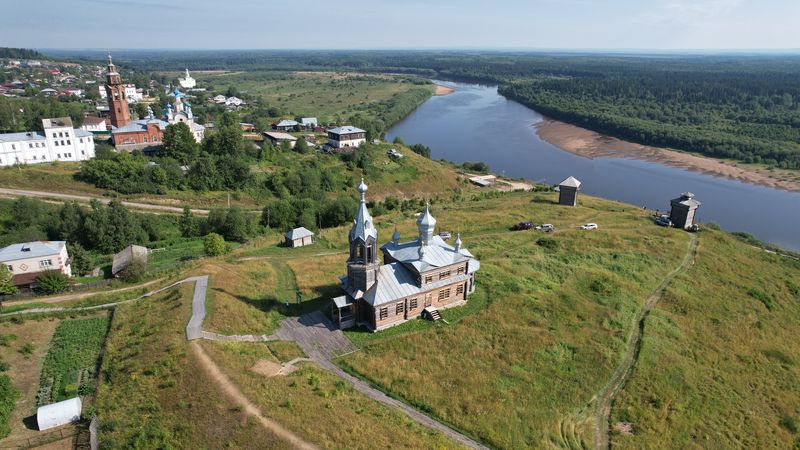
Returning to the hotel, we get our things, go for lunch at "Brusnika", and then go to Cherdyn. The direct road is not far, about 1.5 hours and 100 km. After arriving at the hotel and checking in, we leave our bags and go lightly to Nyrob. There we will visit the Romanov Museum and the Church of St. Nicholas the Wonderworker in Nyrob. We will talk about the history of the Romanov family and how Mikhail Romanov ended up here.
Here you can also see the wooden architecture of the Russian North. There is an ethnic museum, Khokhlovka, not far from Perm, where 15-20 wooden houses from the northern Urals were brought together. But we are purposely not going there. Why look at separate houses in a "reservation" when you can see a whole wooden town/village in real life?
Day 6. Cherdyn, Day of Rest
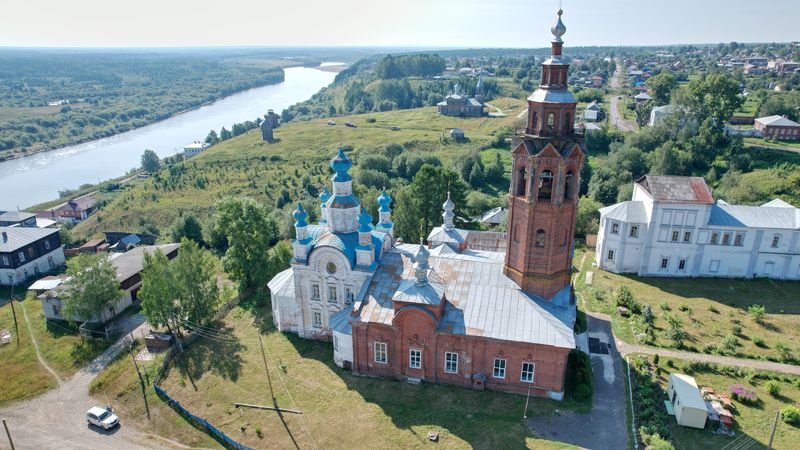
In the morning, a walking tour of the town center with a local guide, visiting the Trinity Hillfort (Troitskoye Gorodishche), Ilyinskaya Church, the Cherdyn Local History Museum, and the Pushkin Museum.
If the weather is nice, instead of the museums, you can take SUPs and go for a paddle on the Kolva River. Sunbathe and swim in the river. Alternatively, you can drive to Pelym, one of the most remote and authentic villages in the Urals, where life flows slowly and steadily. The road is unpaved.
No matter which option you choose, there will be time to enjoy the beautiful views of the Parma forest, leisurely drink coffee on the hotel veranda, go for a walk, and simply do nothing.
Day 7. Cherdyn – Perm, 300 km
We return to Perm, where Madam Zhu will wait for us for dinner. We will also visit the shop and workshop of the company Serebronika, where you can buy nice handmade souvenirs. If we have enough time, we will go to the Museum of Modern Art. By the end of our trip, you will probably already know the story of the Perm Cultural Revolution – and it will be interesting.
Day 8. Flight from Perm




BOOK NEAREST DATE
Tour map
The information is given for general guidance on company services and does not constitute a public offer to contract. Current information on terms and conditions you can check with the representative of the Russian Moto Travel Company, please contact us by phone: 8 (495) 664-58-46, by e-mail: info@rusmototravel.com, or directly at our office: Business Center “Borodinskaya Panorama”, Pervaya Borodinskaya Street 2A, Moscow